Intel Revives Raptor Lake Architecture for Next-Gen Gaming Laptops
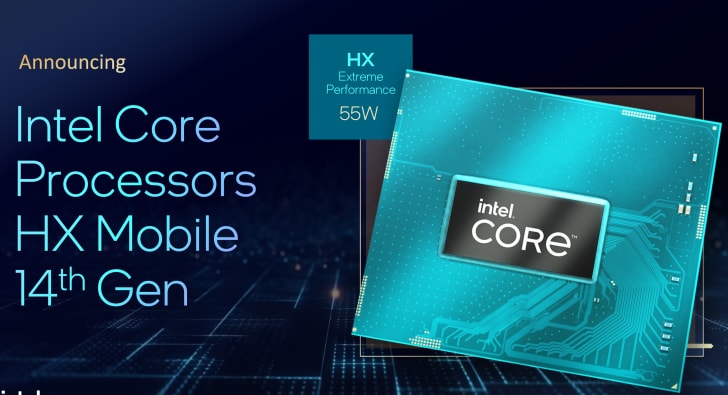
Intel is set to reintroduce its Core "Raptor Lake" client microarchitecture, now internally referred to as "Raptor Lake Next," targeting users who benefit from DDR4 memory compatibility to reduce system costs. This move extends beyond desktop PCs, as Intel plans to refresh its gaming notebook lineup—specifically the high-performance HX segment, which is designed for laptops equipped with discrete GPUs.
The upcoming processors will adopt the new Core (non-Ultra) Series 2 (200 series) model numbering, aligning with Intel’s updated naming conventions. This change aims to provide clarity and consistency across Intel’s processor lineup, making it easier for consumers and OEMs to identify the latest offerings.
Technical Specifications and Performance
Intel utilizes a unified silicon design for both its desktop S-segment and the HX-segment in gaming laptops. The flagship SKU based on "Raptor Lake Next-HX" will fully leverage this silicon, featuring a configuration of 8 performance cores (P-cores) and 16 efficiency cores (E-cores). With HyperThreading enabled on the P-cores, the processor will offer a total of 32 logical threads, delivering substantial multitasking and gaming performance.
Built on the Intel 7 process node, these chips employ a monolithic die design. Notably, the absence of low-power island E-cores means these processors are expected to have higher power consumption compared to more recent architectures. The HX segment is characterized by a processor base power of 55 watts, with maximum turbo power reaching into the triple digits. For context, the previous generation Core i9-14900HX from the "Raptor Lake Refresh" lineup featured a 55 W base power and a peak turbo power of 159 W, prompting notebook manufacturers to include robust power adapters—often rated at 320 W or even 400 W—to support these high-performance systems.
Product Segmentation and Future Roadmap
To prevent overlap between "Raptor Lake Next-HX" and the forthcoming "Arrow Lake-HX" processors, Intel may provide specific product segmentation guidelines to OEMs. One likely strategy is to ensure that gaming laptops powered by "Arrow Lake-HX" are paired with faster DDR5 SODIMM memory, distinguishing them from the DDR4-compatible "Raptor Lake Next-HX" models. This approach helps maintain clear differentiation in the market until the anticipated arrival of "Nova Lake" in the gaming notebook segment, projected for 2027.
Intel’s decision to extend the life of the Raptor Lake architecture underscores the ongoing demand for DDR4 memory support and high-performance mobile processors. As the gaming laptop market continues to evolve, these refreshed HX-series chips are poised to offer a compelling balance of performance and value for both gamers and power users.