Intel's 18A Node Achieves Space-Grade Certification with "Starfire" Processors
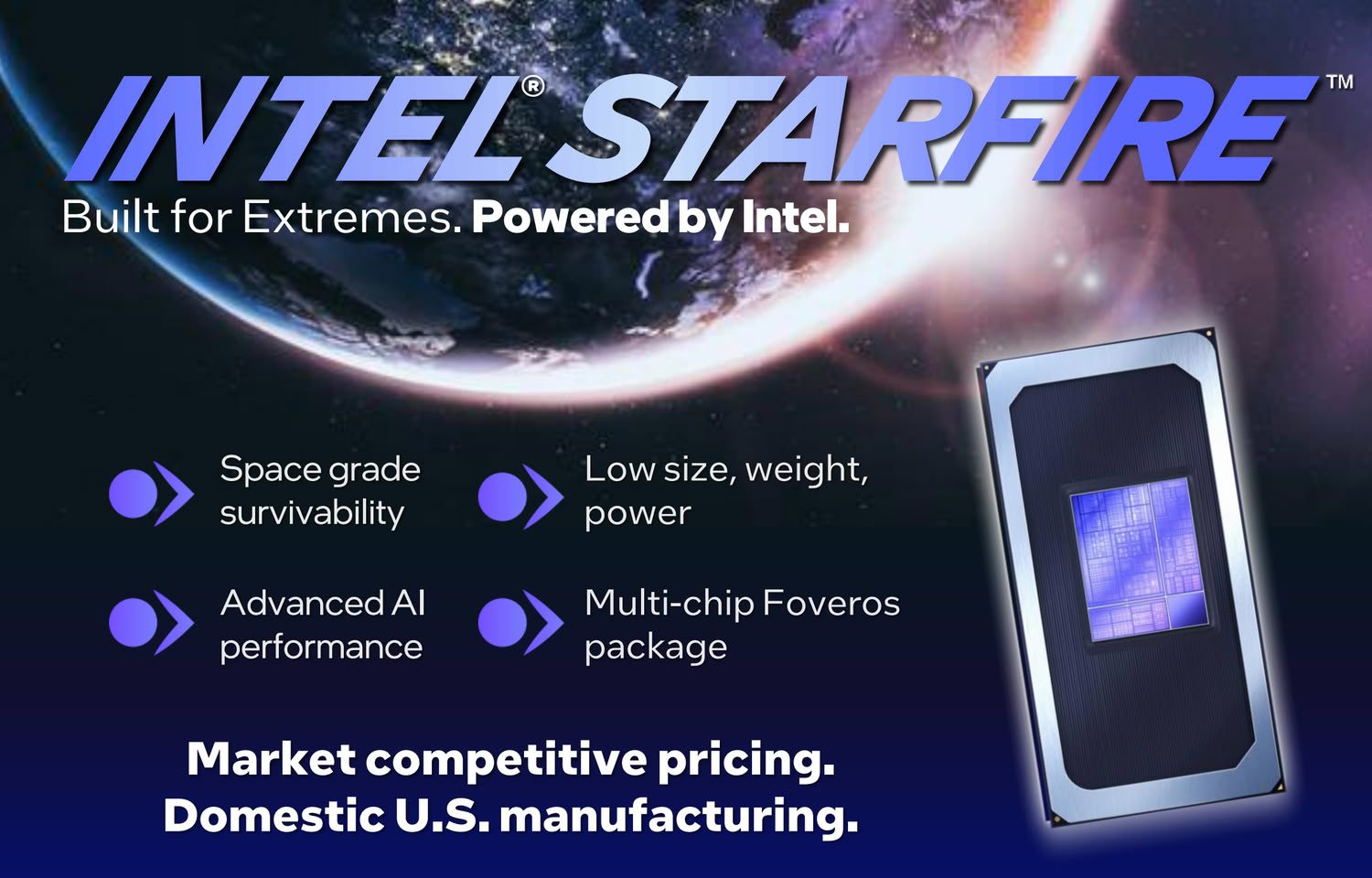
Intel has officially introduced its 18A process node to the realm of space-grade computing, as confirmed by newly published documentation on the company’s website. The announcement details a new generation of processors, codenamed "Starfire," specifically engineered for space operations and orbital computing environments.
Starfire: Advanced Space-Ready SoC Design
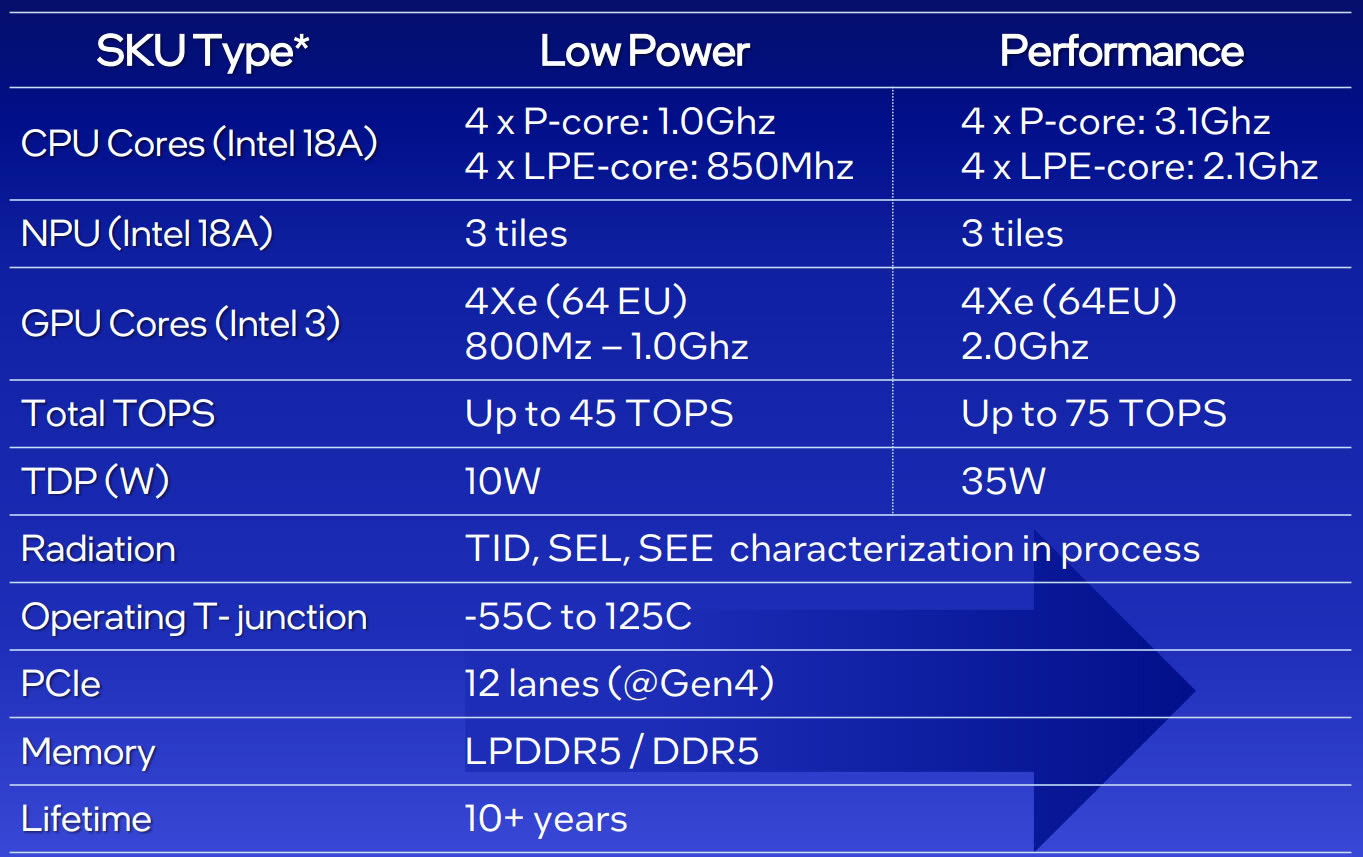
The Starfire lineup features two distinct system-on-chip (SoC) models, each equipped with a total of eight cores—four high-performance P-Cores and four low-power efficiency (LPE) cores. These configurations are tailored to meet the unique demands of space missions, where both energy efficiency and computational performance are critical.
- Low Power SKU: Optimized for energy efficiency, this version clocks its P-Cores at 1.0 GHz and LPE-Cores at 850 MHz, maintaining a total thermal design power (TDP) of just 10 W.
- Performance SKU: Designed for higher computational needs, the Performance edition boosts P-Core frequencies to 3.1 GHz and LPE-Cores to 2.1 GHz, with a TDP capped at 35 W.
Integrated GPU and AI Acceleration
Both Starfire SKUs incorporate a GPU tile built on Intel’s advanced Intel 3 node, featuring four Xe cores with 64 execution units (EUs). The Low Power model operates its GPU between 800 MHz and 1.0 GHz, while the Performance variant increases GPU frequencies up to 2.0 GHz. In addition, each processor includes a neural processing unit (NPU) for AI workloads, delivering up to 45 TOPS (trillions of operations per second) on the Low Power SKU and up to 75 TOPS on the Performance SKU, both using INT8 precision.
Engineered for the Harsh Conditions of Space
Starfire processors are built to withstand the extreme conditions encountered in space. They are rated for operation across a wide T-Junction temperature range, from -55°C to 125°C. Importantly, these chips are certified for radiation hardening, including Total Ionizing Dose (TID), Single Event Latch-up (SEL), and Single Event Effects (SEE) protections. This ensures reliable performance and data integrity in the presence of ionizing radiation, a critical requirement for space-grade electronics.
Radiation Hardening: Essential for Space Computing
Space environments expose electronic components to high levels of ionizing radiation, which can cause bit-flips and degrade processor reliability. To address these challenges, all silicon destined for orbital deployment must undergo rigorous radiation hardening. This process protects CPUs from both long-term radiation exposure and sudden impacts from high-energy particles, ensuring mission-critical systems remain operational and accurate.
Intel plans to begin sampling the Starfire processors in the third quarter, marking a significant milestone as the first 18A silicon designed specifically for space applications. With advanced performance, energy efficiency, and robust radiation protection, the Starfire generation sets a new standard for orbital computing.