AMD FSR 4.1 Performance on RDNA 3 GPUs: A Closer Look at Recent Benchmarks
AMD’s latest release, FidelityFX Super Resolution (FSR) 4.1, has generated significant interest among gamers and hardware enthusiasts, particularly for its promise of improved upscaling performance on RDNA 3 GPUs. However, recent independent testing by ComputerBase has revealed that while FSR 4.1 offers advantages over native rendering, it may not always outperform its predecessor, FSR 3.1, on RDNA 3 hardware.
Benchmark Results: FSR 4.1 vs. FSR 3.1 on RDNA 3
ComputerBase conducted comprehensive tests using the AMD Radeon RX 7900 XTX, RX 7800 XT, and RX 7600, comparing FSR 4.1 and FSR 3.1 across nine popular games. The results highlight some unexpected performance regressions with FSR 4.1 on RDNA 3 GPUs.
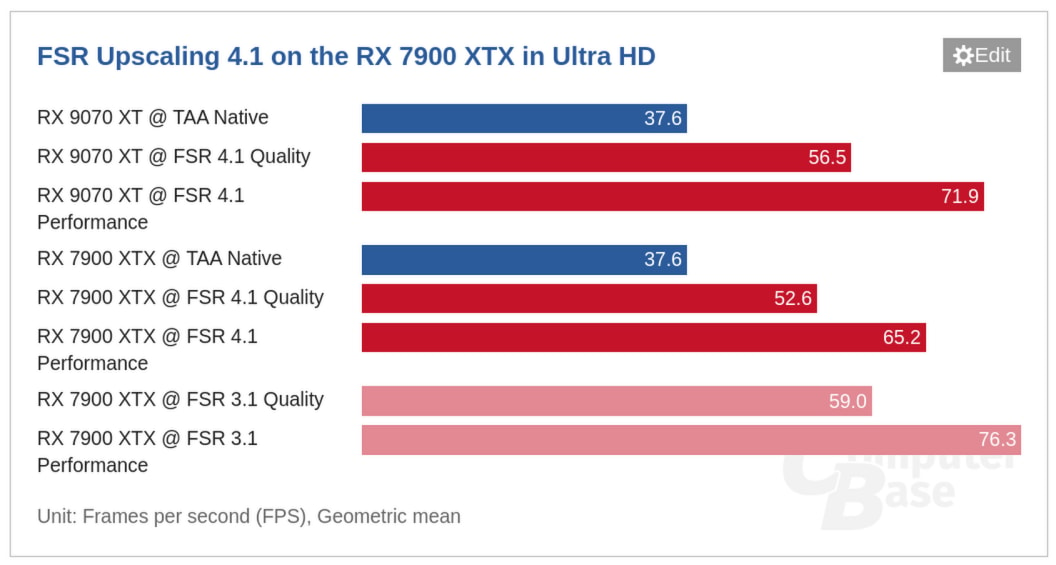
For example, in 4K native resolution, the Radeon RX 9070 XT and RX 7900 XTX delivered identical frame rates. However, when FSR 4.1 Quality mode was enabled, the RX 7900 XTX achieved 52.6 FPS, while the RX 9070 XT reached 56.5 FPS—a 7% performance deficit for the RDNA 3 flagship. The gap widened in Performance mode, with the RX 7900 XTX at 65.2 FPS and the RX 9070 XT at 71.9 FPS, resulting in a 9% difference.
When directly comparing FSR 4.1 to FSR 3.1 on RDNA 3 GPUs, the geometric mean across the tested games showed an 11% performance penalty for FSR 4.1 in Quality mode and a 14.5% regression in Performance mode. These findings suggest that, at least for now, FSR 4.1 may not deliver the expected performance uplift on RDNA 3 hardware compared to FSR 3.1.
Technical Factors Behind the Performance Gap
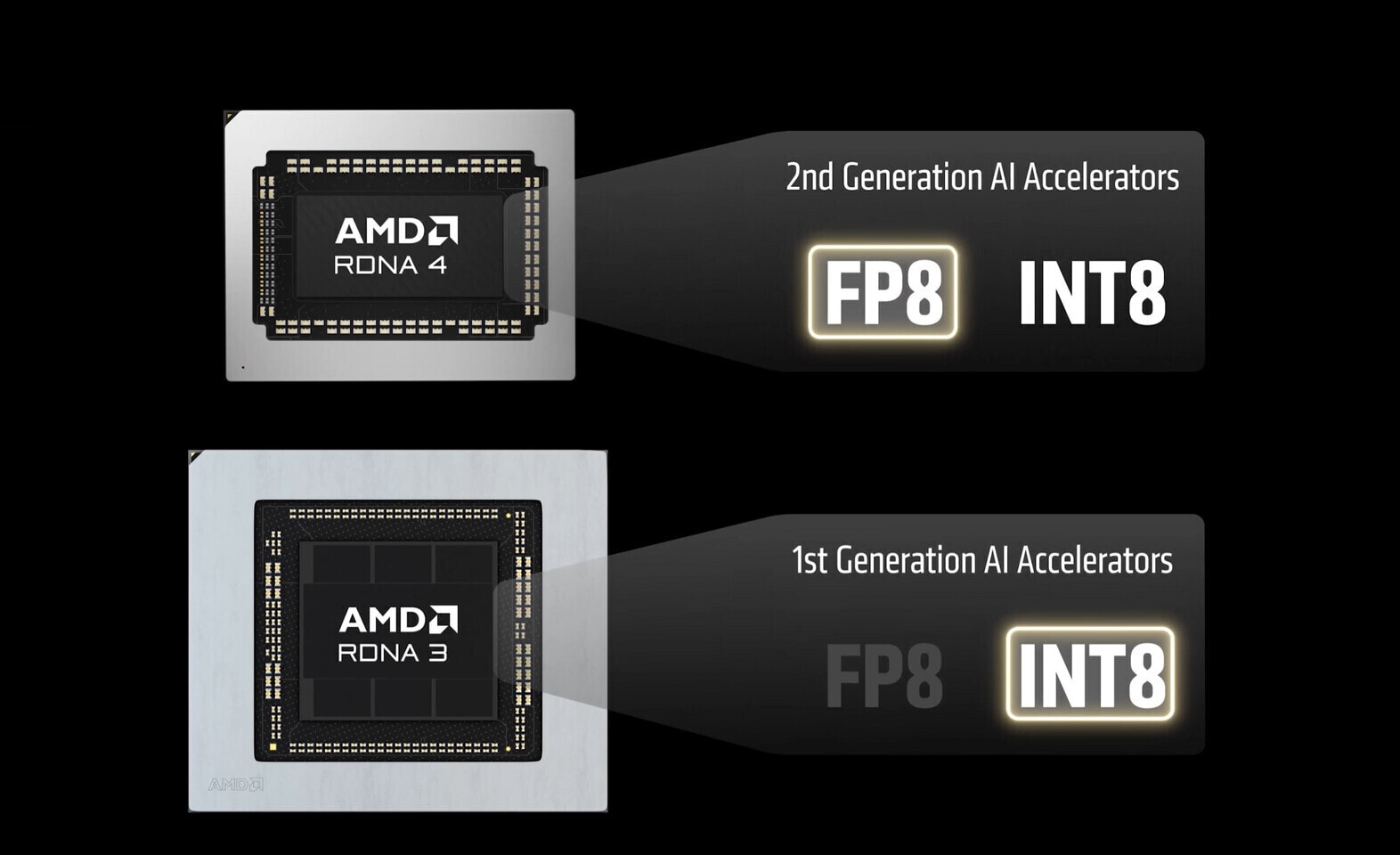
AMD has addressed these results, noting key architectural differences between RDNA 3 and the newer RDNA 4 GPUs. FSR 4.1 on RDNA 3 relies on 8-bit integer (INT8) data processing, while RDNA 4 leverages advanced FP8 support in its second-generation AI accelerators. This hardware distinction allows RDNA 4 GPUs to process FSR 4.1 upscaling more efficiently, which likely contributes to the observed performance disparities.
Despite these differences, AMD has stated that it aims for visual quality parity across RDNA generations. However, the performance penalty on RDNA 3 suggests that achieving this parity comes at a computational cost for older hardware.
FSR 4.1 Support for Older GPUs
FSR 4.1 has not yet been released for RDNA 2 GPUs, such as the RX 6000 series. AMD has indicated that official support is planned for early 2027. Implementing FSR 4.1 on RDNA 2 is expected to be even more challenging, as these GPUs lack dedicated AI accelerators and must rely on Stream Processors for upscaling tasks. The impact on performance for these older cards remains to be seen.
Performance Trends Across the Radeon Lineup
The performance gap between FSR 4.1 and FSR 3.1 is not limited to flagship models. On the RX 7800 XT, FSR 4.1 Performance mode underperformed FSR 3.1 Performance by 9%, while FSR 4.1 Quality mode showed a 7% regression. The RX 7600 exhibited similar trends, with a 7% difference in Quality mode and a 9% gap in Performance mode between the two FSR versions.
Conclusion
While AMD FSR 4.1 introduces new upscaling technology and aims for consistent image quality across GPU generations, current benchmarks indicate that RDNA 3 users may experience lower performance compared to FSR 3.1. The architectural advancements in RDNA 4 appear to be a key factor in FSR 4.1’s improved efficiency on newer hardware. As AMD continues to expand FSR 4.1 support to older GPUs, further testing will be essential to understand the full impact on gaming performance across the Radeon lineup.